I am highly flattered by being asked a technical sewing question.
Mary Nanna, excellent seamstress of
Make it Smirk fame, commented
"You mention using elastic in the seams with the merino - can you explain this process?"
Despite a sneaking suspicion that Mary Nanna is much better at sewing than I, and could possibly be asking this question with the aim of provoking some smirking from champion sewers of knits, here is my approach to this process, developed by close inspection and some destruction of RTW, and considerable trial and error. Please note that I am a self taught seamstress and profess no qualifications in the "right" way to carry out any sewing what so ever. (That disclaimer was for Bunny, because she has
a very good point about tutorials). This is how
I use elastic in the seams of knits. Your results may not be the same ;)
1. Inspect the fabric. Deliciously buttery stretchy fabric that ripples into a puddle on the sewing room floor at every opportunity is a very good candidate for elastic in the seams. If your knit is stable and has fabulous recovery, elastic may not be of much use to you, and may just increase bulk in your seams.
2. Consider your seams. Elastic is useful in knits for seams that you want to stretch just a bit, but not too much. Seams under stress, that you do not want to stretch at all (eg fitted shoulder seams) may require more stability than elastic can offer. For example: I regularly use twill tape or woven fabric selvage in shoulder seams on knits - voile or organza in a fine knit, and quilting/shirting cotton for a medium knit. Other people regularly use clear elastic in shoulder seams with good results, but this has not been my experience.
3. Elastic, Foot, Needle and stitch selection:
These decisions depend on several factors. For merino knits, swim wear, and thin rayon knits, I use a clear elastic described as "swimwear" elastic, produced by Beutron, and supplied in Australia by J.D.Leutenegger. I buy it by the roll, and use a roll within 2 years or so, so the elastic is relatively fresh. I find that this elastic is difficult to sew with a ball point needle, which is recommend for knitted fabric, and which is the needle I tend to use for merino where elastic is not involved. Instead I use a stretch needle of 70 or above when using elastic in the seams. As I am lazy, I generally do not change the needle back to a ball point to complete the remainder of the garment, which has occasionally lead to stitch problems with fine fabrics. I generally use a walking foot on my conventional machine when sewing with knits, and have much better success when sewing elastic if I am using the walking foot rather than when using a regular foot.
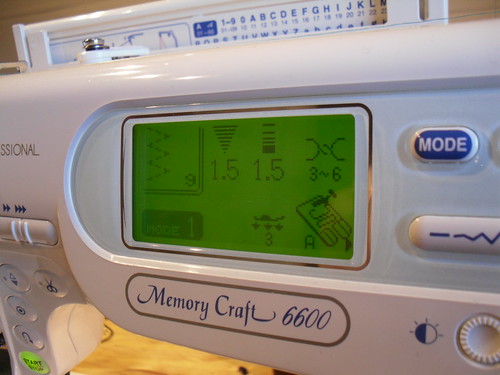
The stitch I like to use when including elastic in the seam is a 3 step zigzag, with stitch length of between 1.0 and 2.0mm and stitch width of between 1.0 and 1.5mm. On occasion, when I am using the elastic to assist in gathering the fabric, I use a straight stitch.
4. Consider the purpose of the elastic
a) Supporting a stretch seam
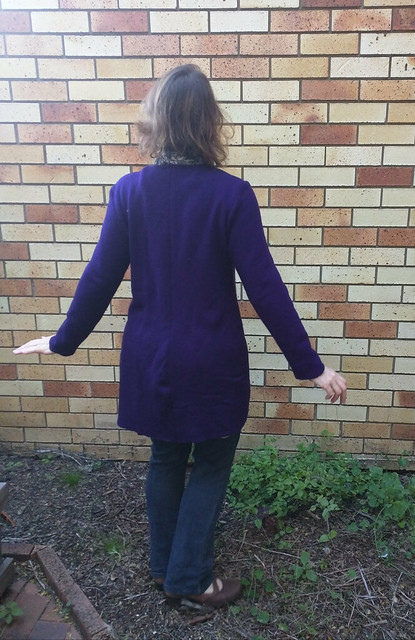
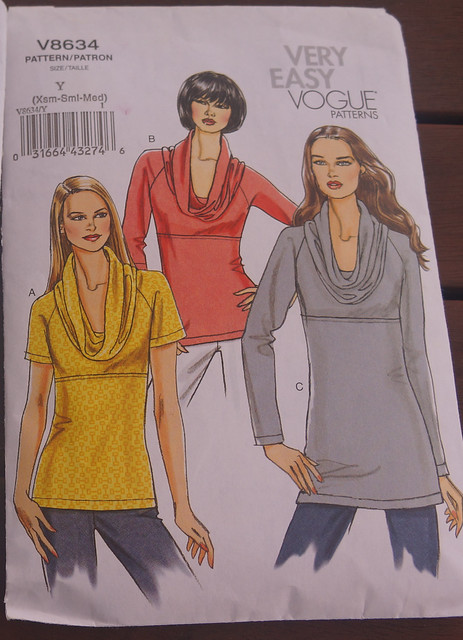
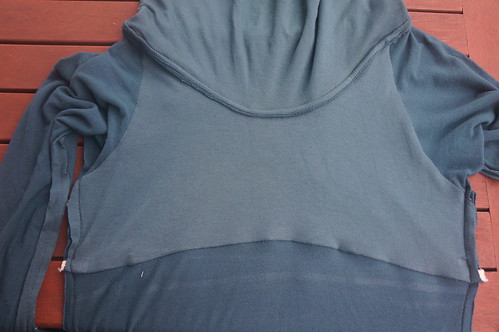
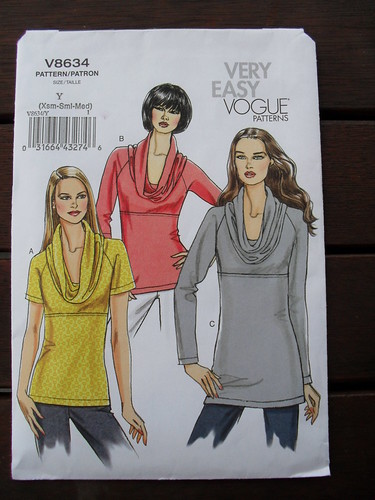
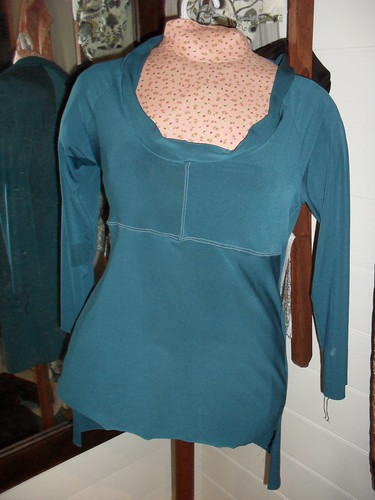
In the raglan merino top I made recently (Vogue 8364) leading to Mary Nanna's question, I wanted the elastic to support the seams mostly vertically, as the fabric was very unstable, and did not have a snappy recovery. (Merino rib knit). I suspected that should I sew this garment without using elastic, my top would end up knee length by the end of the day, with sleeves extending well past my finger tips.
I sewed the elastic on top of the seam without stretching, just holding it in place as I sewed the regular seam.
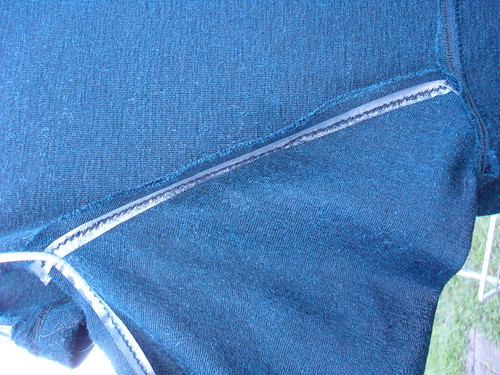
I did this for all of the raglan seams, the neckline seam and for the sleeve and side seams, so that the top does not stretch out of shape during wear, nor during washing. I clip the elastic where seams intersect.

Adding the elastic to the seams worked very nicely, even though I hung the top on the line to dry (folded in the middle over the line) instead of laying it flat on a towel to dry as would have been the most garment protective option ;).
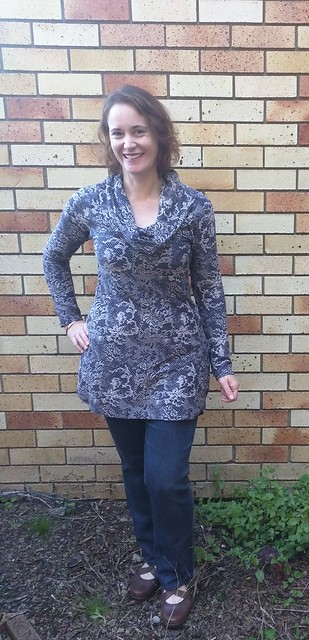
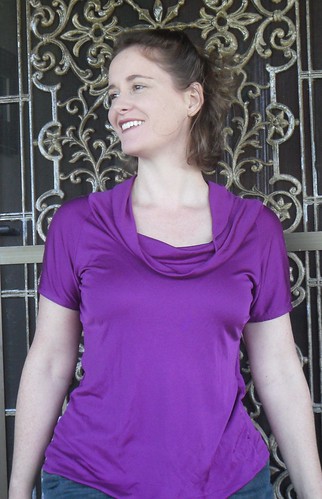
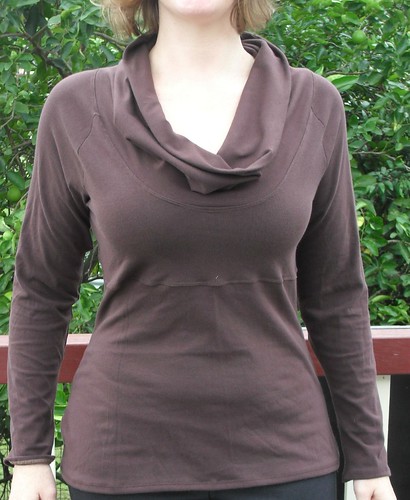
In the following top, Vogue 8305, which I sewed for my demonstration photos, I used the elastic differently. This merino jersey top has some lycra in it, and has better recovery than the merino rib fabric used in Vogue 8. The elastic requirements are different.
b) Preventing gaping in a neck seam
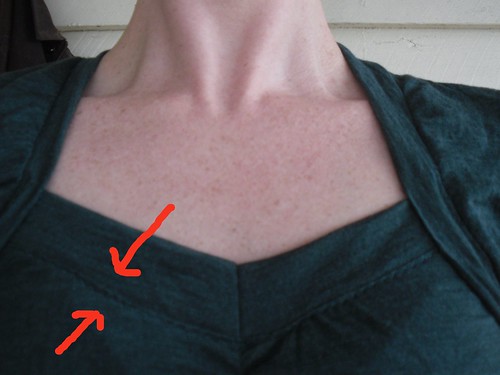
I used elastic in the neckline-facing seam. I had previously found that this wrap over style tended to gape during wear, so I stretched the elastic slightly as I sewed it directly over the seam, gathering the seam very slightly. To do this, I used the same needle, foot and stitch length, but stretched the elastic equally to the front and the back at the same time (so that the needle was not pulled to either direction. I stretch the front with my right hand and the back with my left hand.
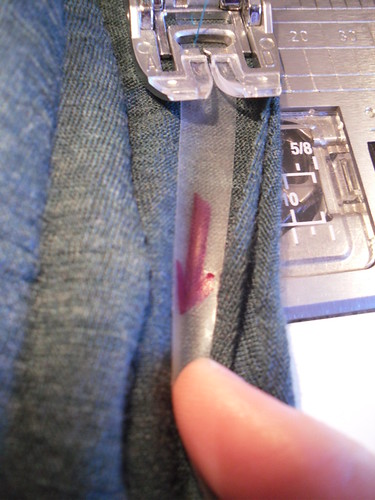
(just pretend that photo has the elastic being pulled straight from the front - pressing the button on the camera was tricky with my left hand)
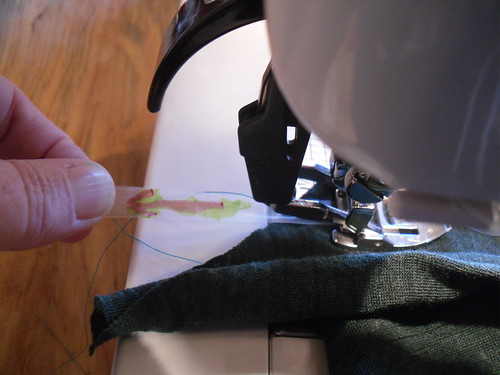
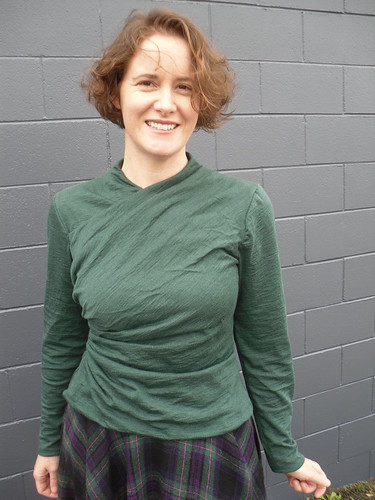
In wear, the intention is that the the slight gathering will be stretched out by the body, so that the neckline lays flat. This is where trail and error come in!
For this garment I did not use any elastic in the sleeve or side seams with the following exception-
c) A stretchable stay for gathering or pleats
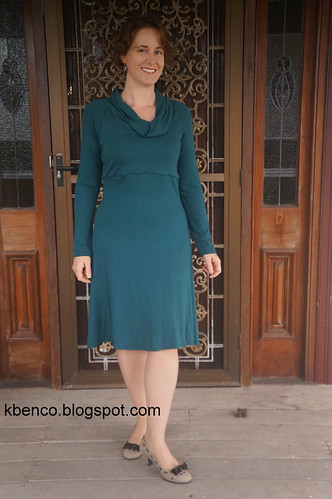
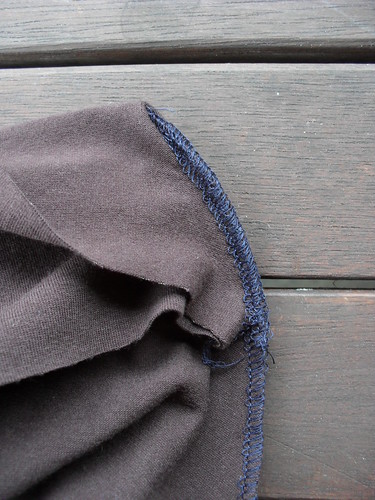
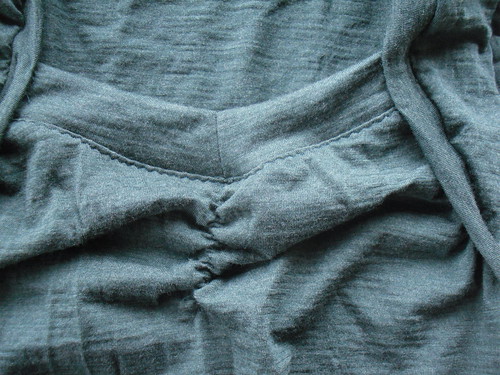
The other use of elastic in this garment was as a stay for the gathering at the side seam. This gathered area needs to stretch with the garment, but when unsupported, has a tendency to droop in a southerly direction, ruining the line of the dress and giving an unfortunate impression of pot bellied-ness. In this seam, the gathered fabric is overlaid with the unstretched elastic, and the same 3 step zig zag is used to attach the elastic as a stay before the side seam is sewn.
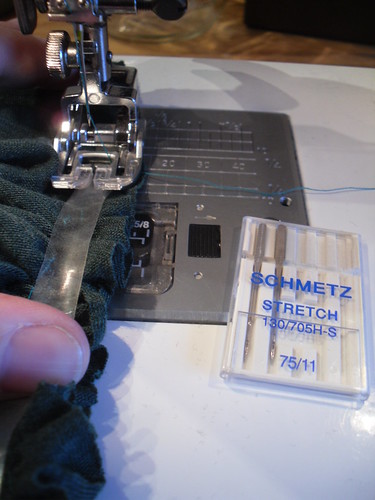
Here I guide the fabric front and back using my left hand to hold the elastic in place, without stretching.
d) To increase the recovery of a knit fabric within a binding
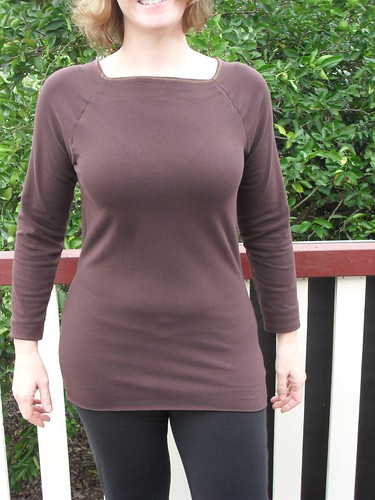
In Jalie 2795, the sweetheart top, which I have made many times, the front bodice binding is stretched significantly to shape the t shirt.
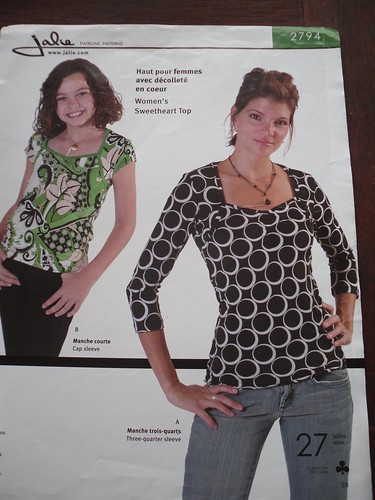
My merino knit did not have enough recovery, in my opinion, to shape the neckline sufficiently without unsightly rippling and bagging of the finished front neckline.
In this instance, I placed the unstretched clear elastic inside the folded binding and overlocked the three layers together.
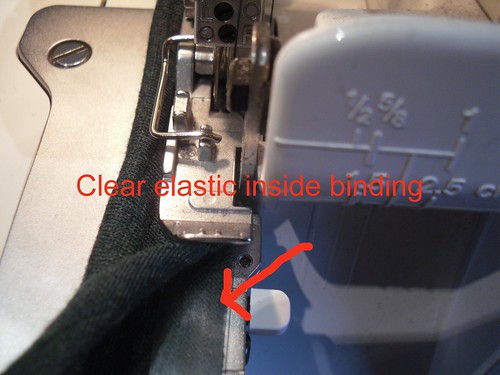
When I later stretched this binding to fit the front bodice piece per the instructions, the elastic ensured that the bodice was gathered in as if I had used a fabric with better elasticity than my merino jersey. (The seam is also topstitched through the elastic)
Elastic in seams gives the garment more longevity, sometimes more stability and sometimes more recovery. Using it is a bit of a trial and error process, but for me, it was worth some experimental sewing.